Our Craft
How Phulkari Is Made
A Phulkari shawl is the result of many hours of concentrated handwork carried out in stages. Nothing about the process is automated, and none of it can be rushed.
This page follows a piece from the first choice of cloth to the finished shawl.
Step 01
Choosing the ground fabric
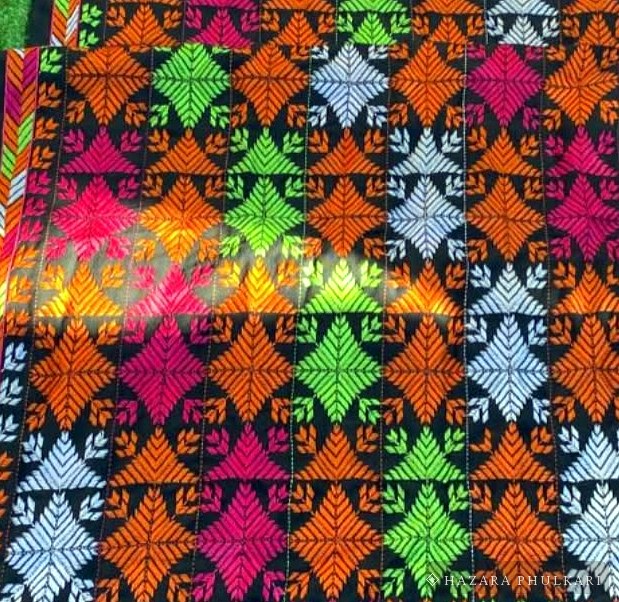
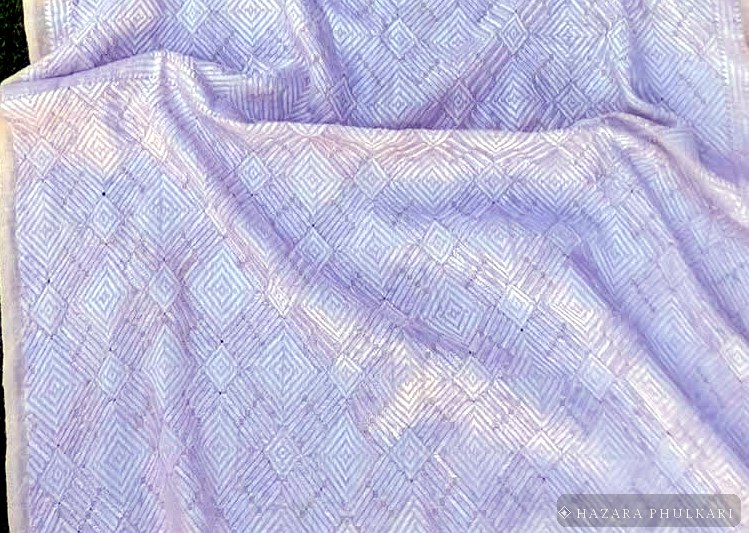
Everything begins with the cloth. Because Phulkari is counted-thread work, the weave itself becomes the grid the embroiderer works to, so an even, well-woven ground is essential.
The colour of the fabric is chosen with the finished design in mind. On an open Phulkari it will remain visible; on a dense Bagh it will almost entirely disappear.
Step 02
Selecting thread and colour
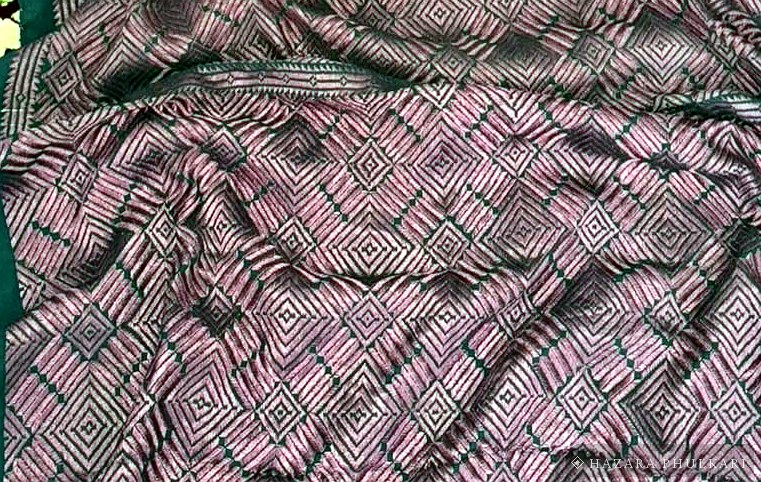
Floss silk thread is selected for both colour and sheen. Shades are considered together rather than individually, since the way two colours meet across a motif changes how both are read.
Some pieces use a wide contrasting palette; others stay within one family so that the pattern emerges only through stitch direction.
Step 03
Counting and stitching
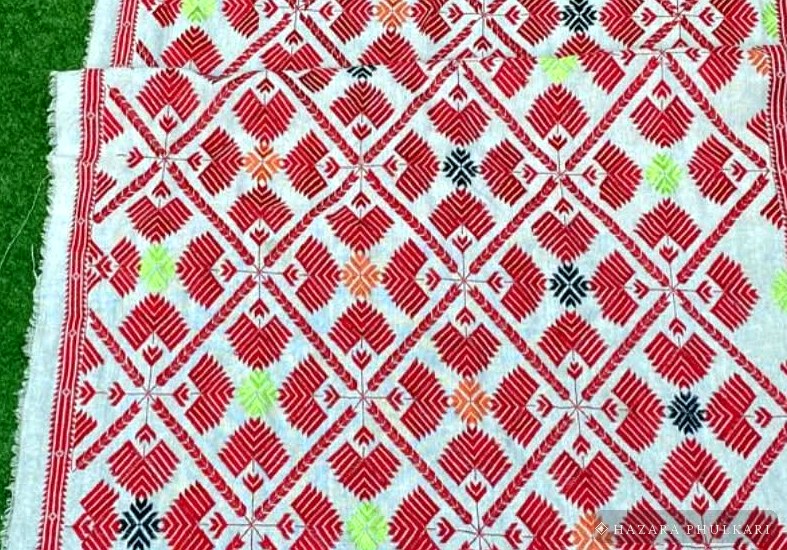
The embroiderer counts threads in the weave and places each stitch accordingly, often working from the reverse of the fabric so the pattern forms on the front face.
There is no outline to follow. The design is held in memory and repeated, which is why this stage takes the longest and demands the most concentration.
Step 04
Building the field
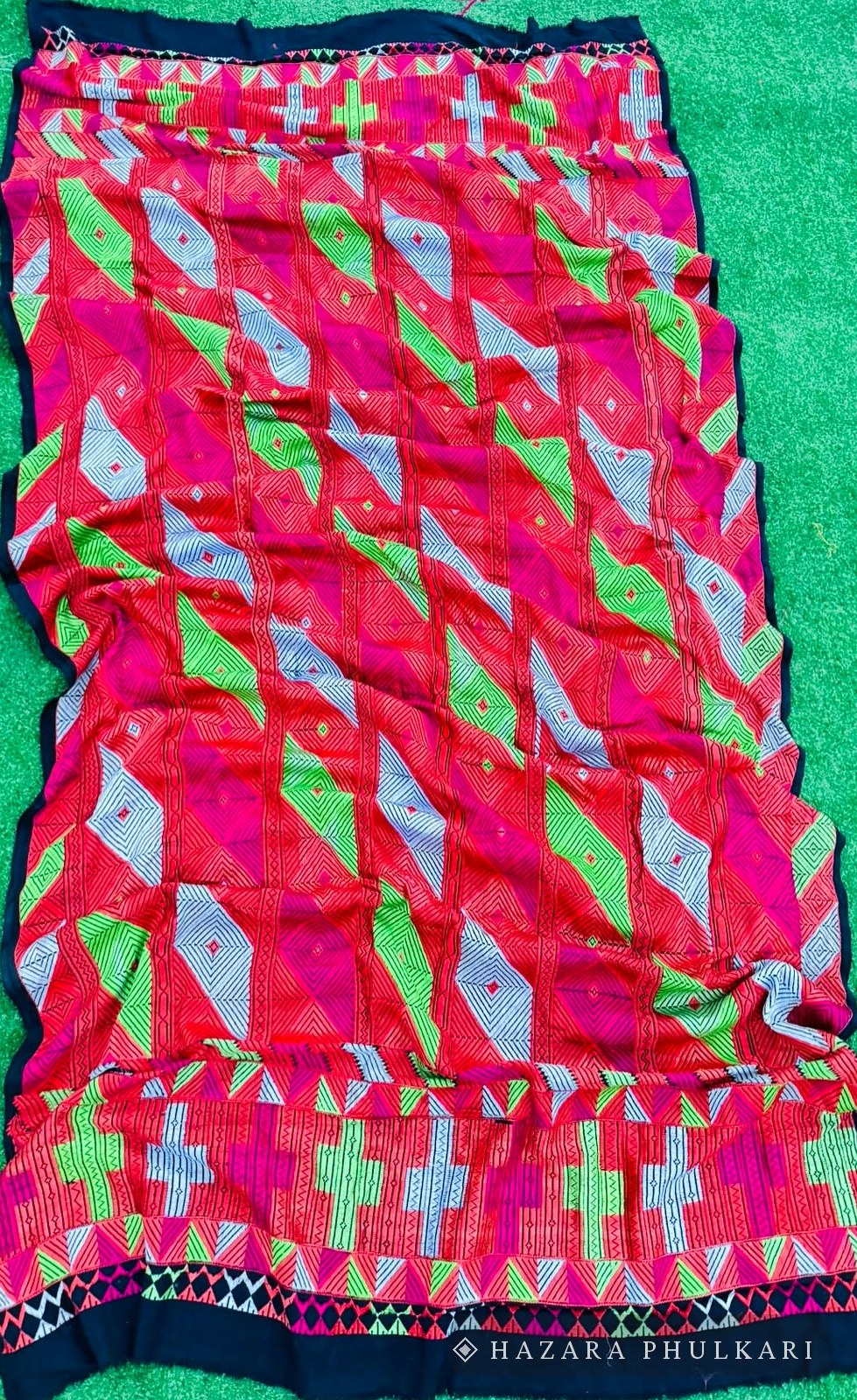
Motifs are extended across the shawl in sessions over days and weeks. Tension must stay even throughout; a change in rhythm shows immediately in the surface.
Borders are worked to frame the field, and the density of the work is adjusted so the whole piece reads as one composition.
Step 05
Finishing and inspection
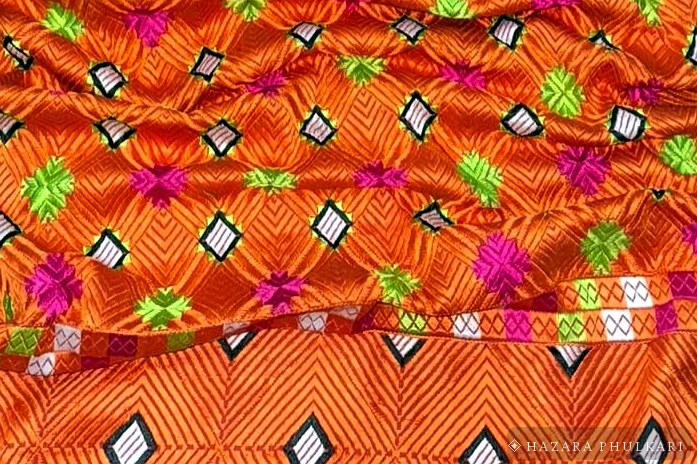
Once the embroidery is complete the piece is checked, edges are finished, and any loose threads are secured.
The shawl is then photographed in natural light so what you see is as close as possible to the piece in hand.
Time
Weeks of handwork in a single shawl
Accurate counted embroidery cannot be sustained indefinitely, so work happens in sessions. A densely embroidered piece may progress over months rather than days. That time is the reason the tradition is worth protecting.
Want a piece made for you?
Custom work follows exactly the same process. Tell us the colours, motifs and fabric you have in mind and we will discuss what is possible.