HAZARAPHULKARI

The Technique

Phulkari Embroidery

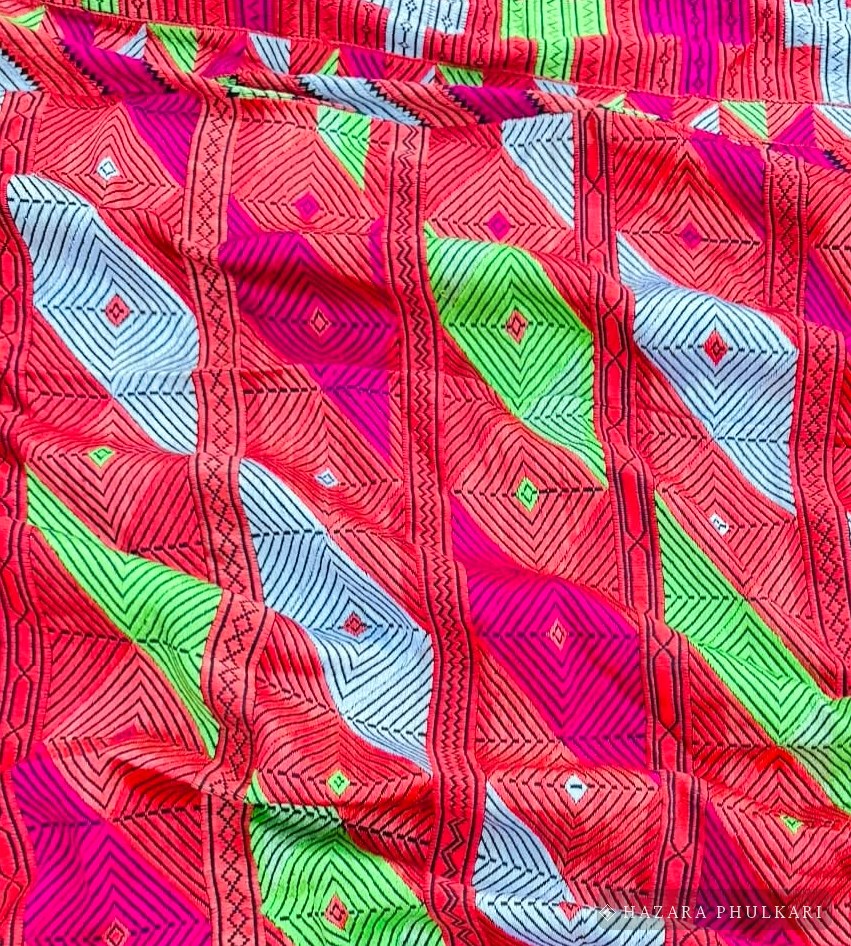
Phulkari is not a single pattern but a way of working. Motifs are built with counted stitches placed in relation to the weave of the ground fabric, without a printed outline to follow.

Within that method there are distinct styles. The pages below explain the ones represented in our collection.

Close-up of Phulkari hand embroidery showing counted-thread stitches forming diamond motifs
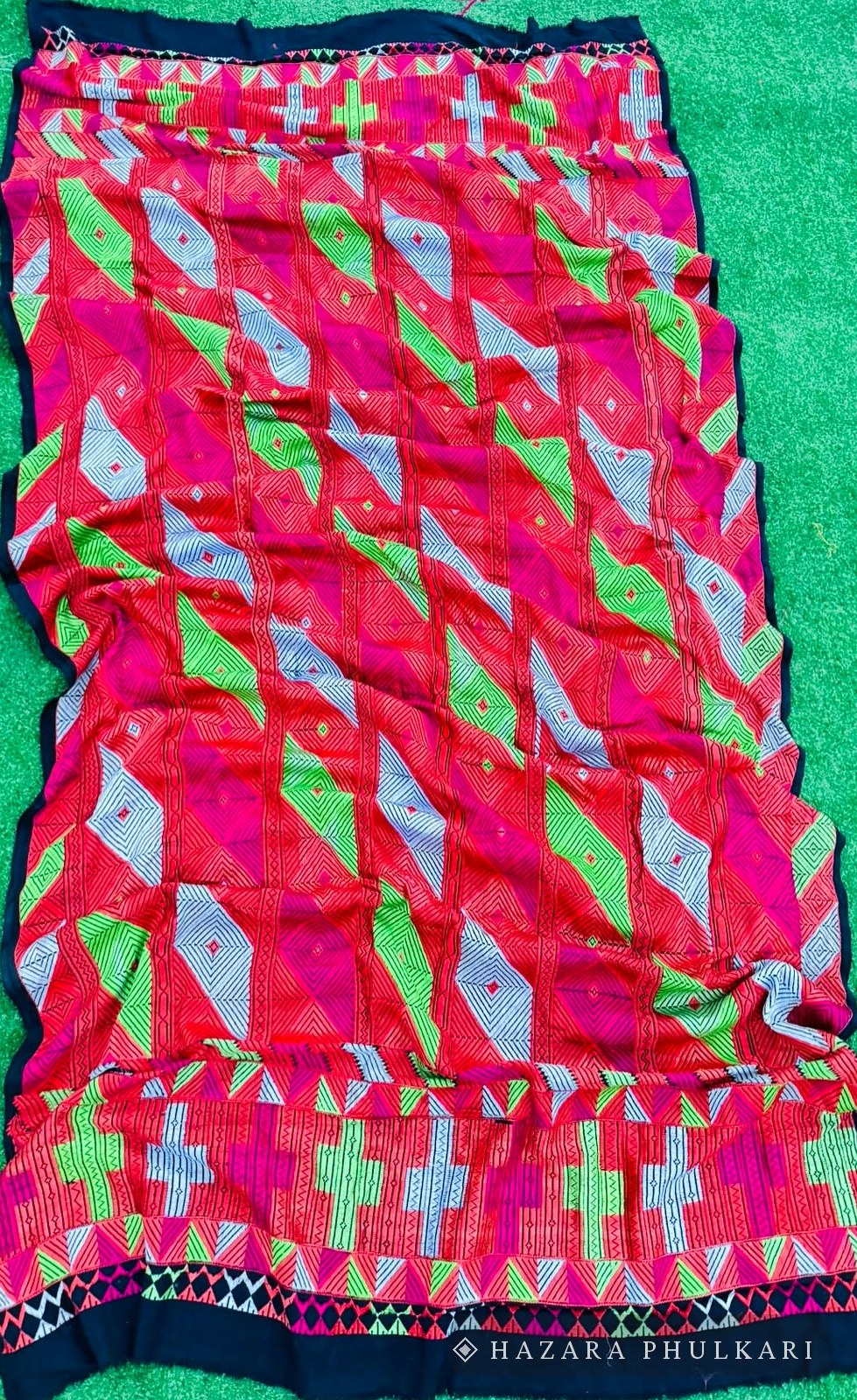
Full view of a densely embroidered Bagh Phulkari shawl with diagonal geometric motifs on a black ground fabric

Bagh Phulkari

Embroidery that covers the cloth

In a Bagh, the embroidery is worked so densely that the ground fabric is largely concealed. What you see is a surface made almost entirely of thread, built up motif by motif until the cloth beneath disappears.

This density is what makes a Bagh so demanding. It requires far more thread and far more hours than a lighter Phulkari of the same size, and the pattern must stay consistent across the entire field.
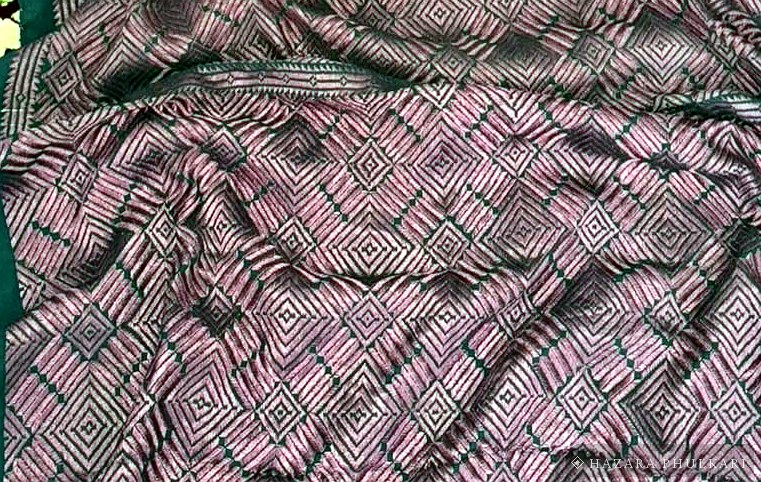
Detail of Resham silk thread embroidery showing the sheen of the stitched surface

Resham Embroidery

Silk thread and directional light

Resham refers to silk thread. Because floss silk has a natural sheen, the direction in which each stitch lies determines how light reflects from the surface.

In tonal pieces this becomes the pattern itself: a single colour family, with motifs revealed only through the way the thread catches the light as the shawl moves.

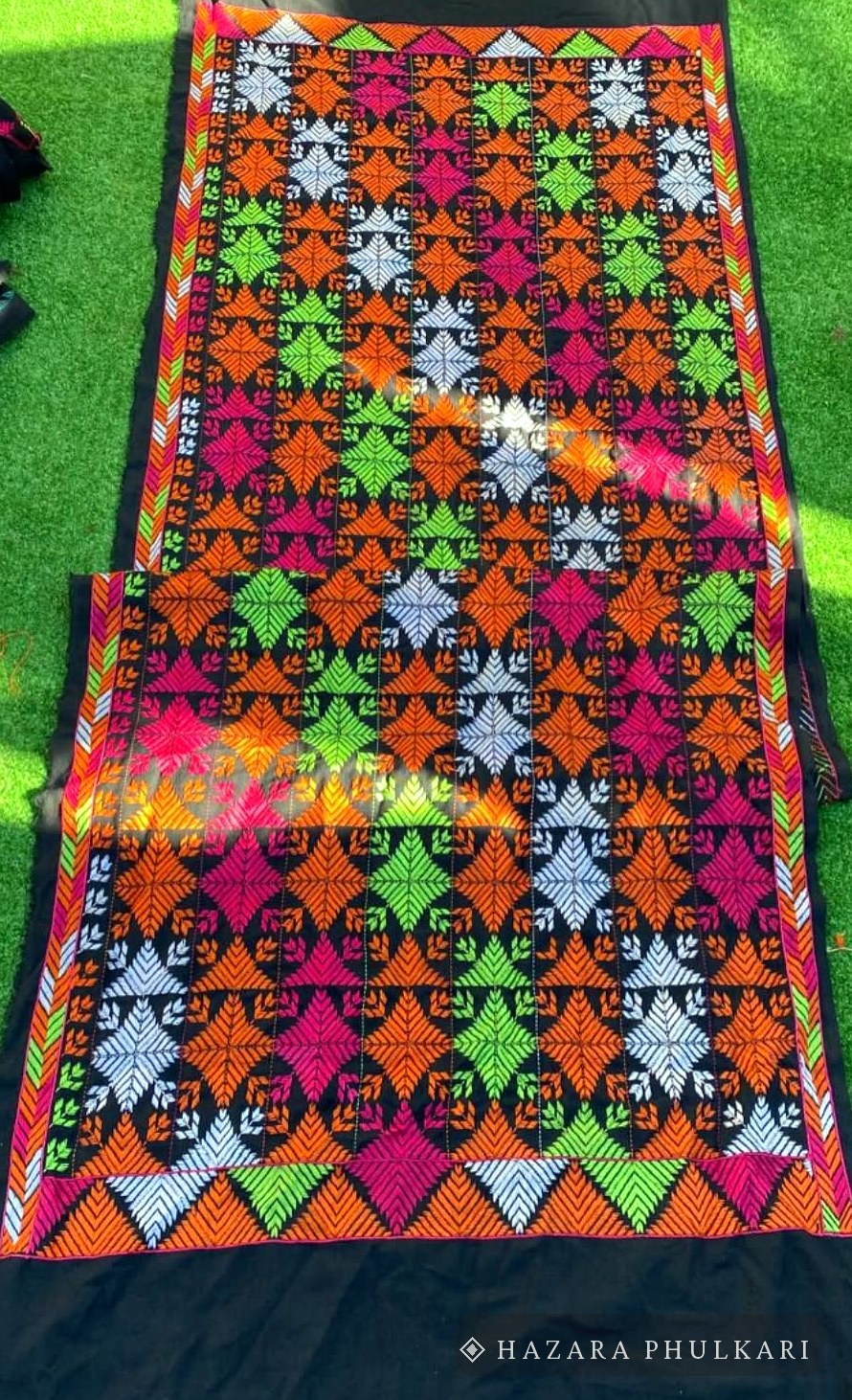
Two handmade Phulkari shawls with orange, pink and green leaf motifs embroidered on black fabric

Traditional Phulkari

Motifs on an open ground

In traditional Phulkari the ground fabric remains visible between the motifs, so the base colour contributes to the composition rather than disappearing beneath it.

This allows for lighter, more open pieces where individual motifs can be read clearly and the rhythm of the spacing matters as much as the embroidery itself.

Reading a Piece

What to look at when you look closely

Stitch direction tells you how the piece was worked and how it will behave in light. Motif spacing tells you how carefully the embroiderer counted. The reverse of the fabric shows the working method more honestly than the front.

Handwork always contains slight irregularity. Repeated motifs are similar rather than identical, and that difference is the clearest evidence that a human hand made the piece.

Questions about a particular style?

We are happy to explain the embroidery on any piece in the collection, or to send additional close-up photographs before you decide.