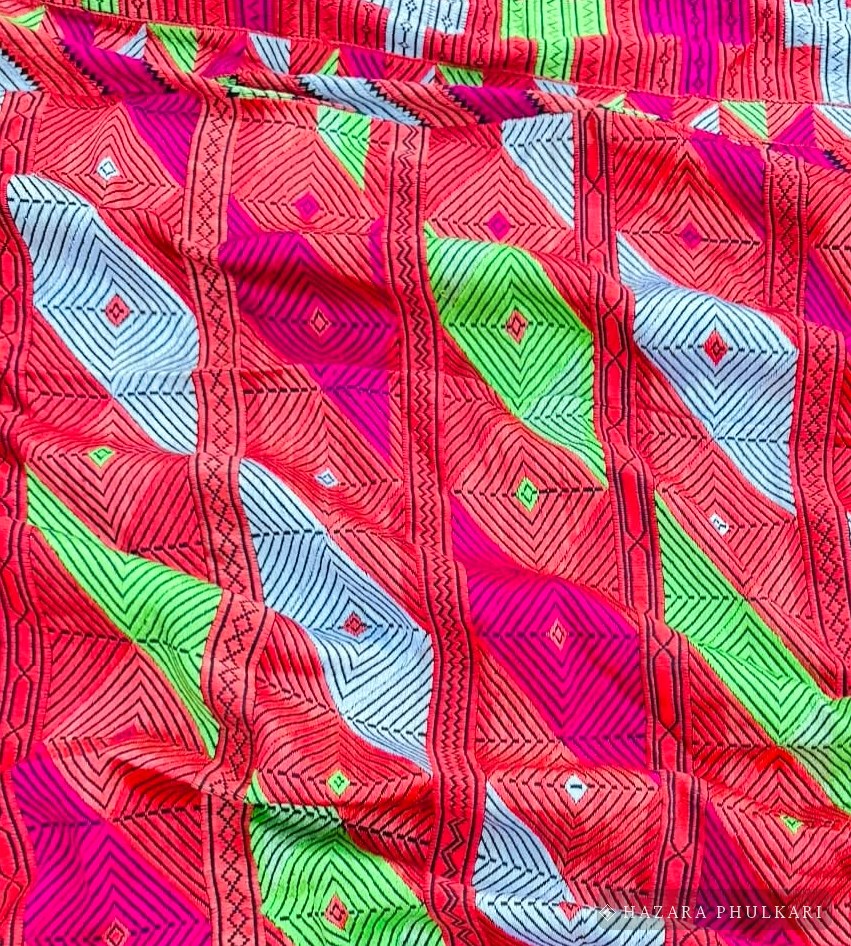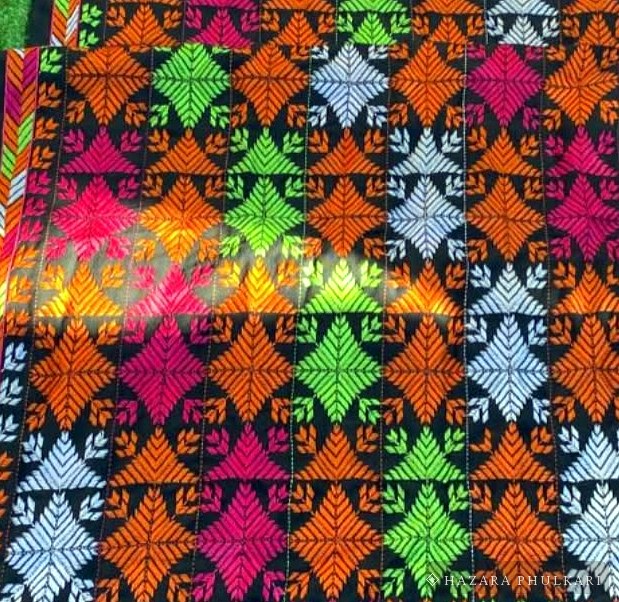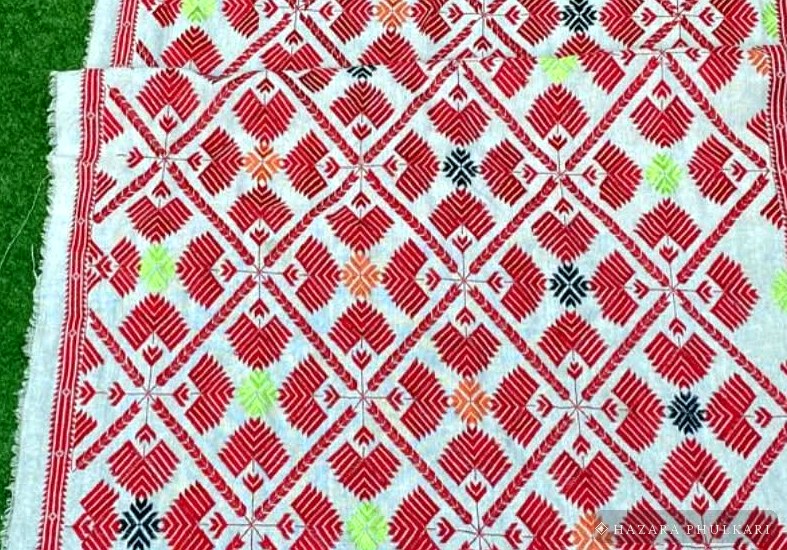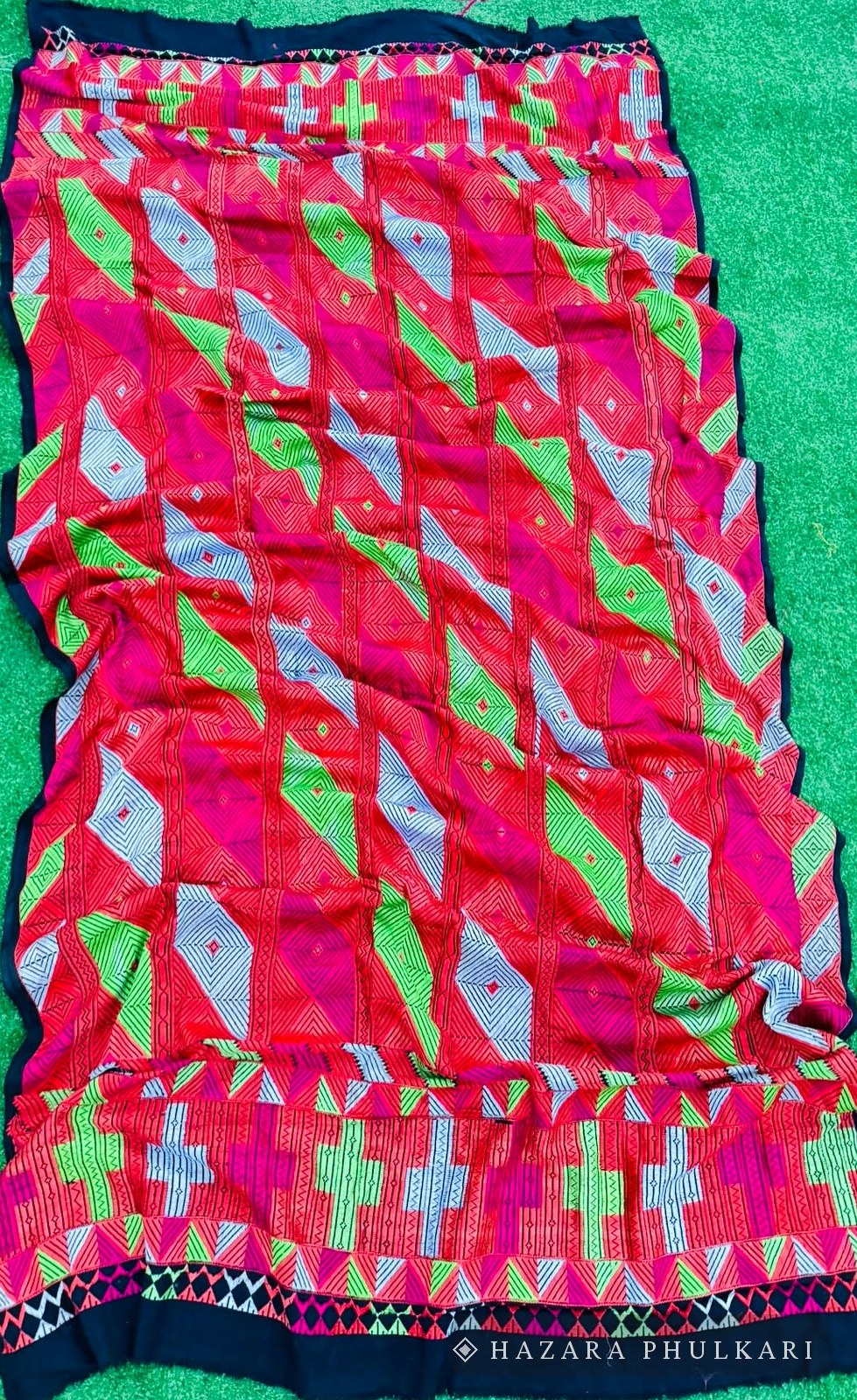
Phulkari developed as a domestic craft rather than a commercial one. Embroidery was worked at home, often over long periods, and pieces were made for use within the family rather than for sale.
That origin explains a great deal about the tradition: its patience, its personal quality and the fact that so much of its knowledge passed from one generation to the next through practice rather than instruction.
A Craft Made at Home
Historically, embroidery was begun long before a piece was needed. Work continued in whatever time was available, which is why older shawls can represent months or years of intermittent handwork.
Because pieces were made for the family, they carried meaning beyond decoration. A shawl was associated with the person who made it and the occasion it was intended for.
Motifs and Regional Variation
Motifs varied by region and by household. Some drew on plant and floral forms, others on geometry, and many combined both. Patterns were remembered and repeated rather than recorded.
This is why Phulkari is best understood as a family of related traditions rather than one fixed style.
The Craft Today
Hand embroidery of this kind takes time, and machine production has changed the wider textile market considerably. Handmade Phulkari continues because embroiderers keep working in the traditional way.
Supporting handmade work directly is one of the clearest ways the tradition is sustained.
Our collection focuses on handmade pieces. If you would like to enquire about availability, please get in touch.
Enquire Now