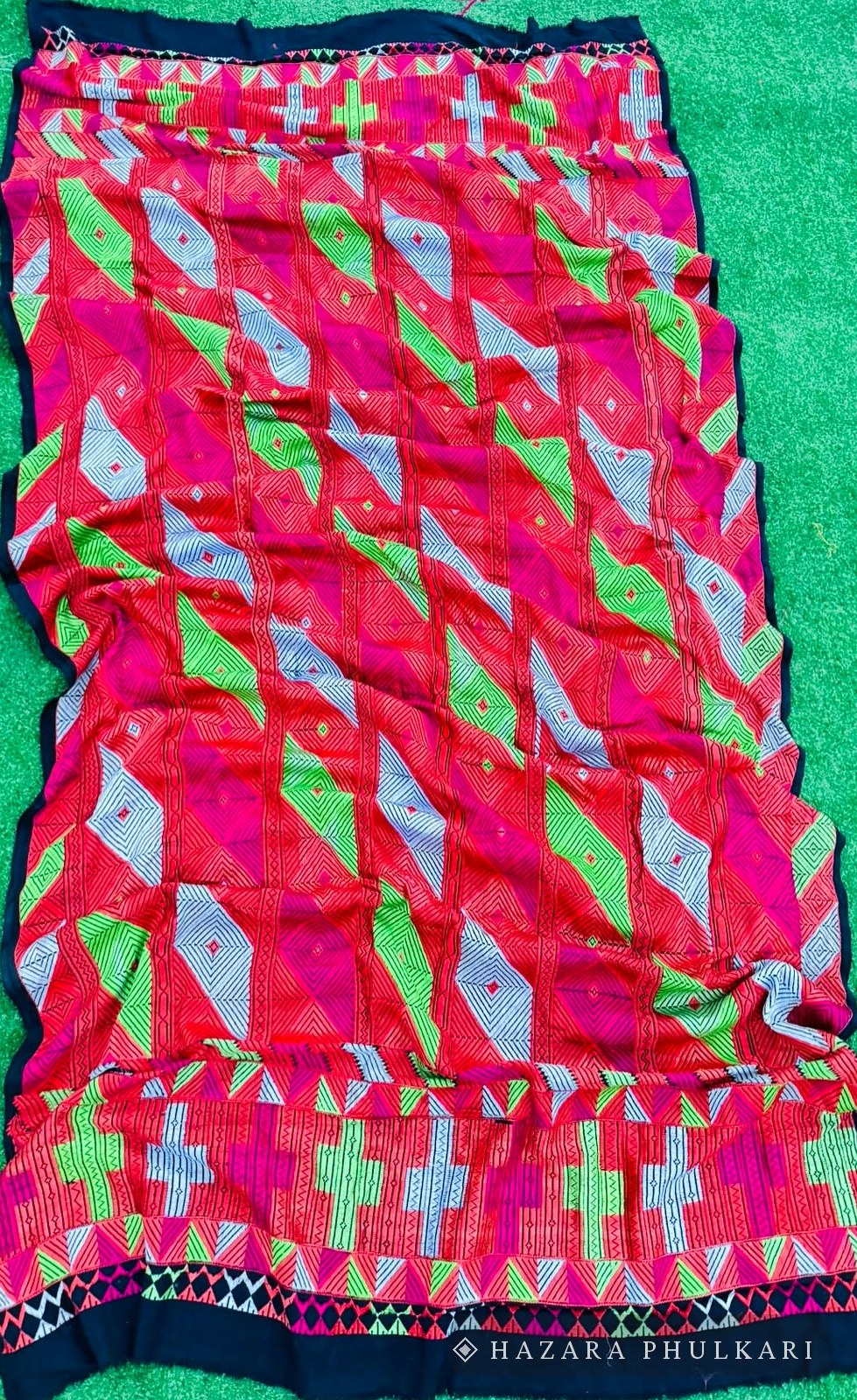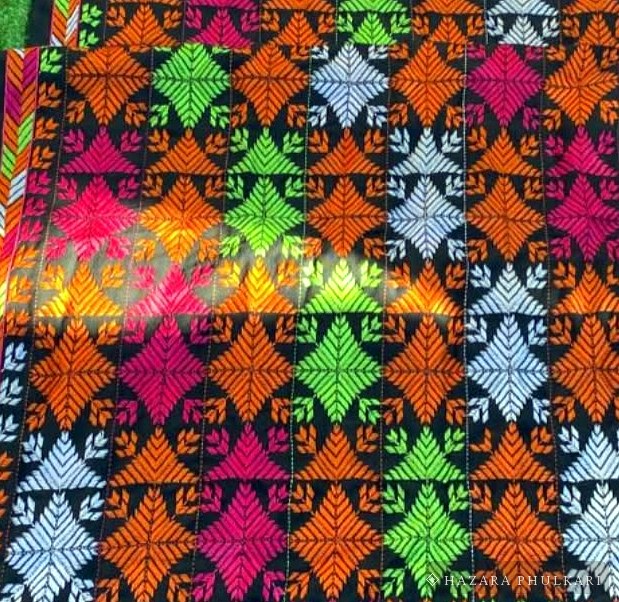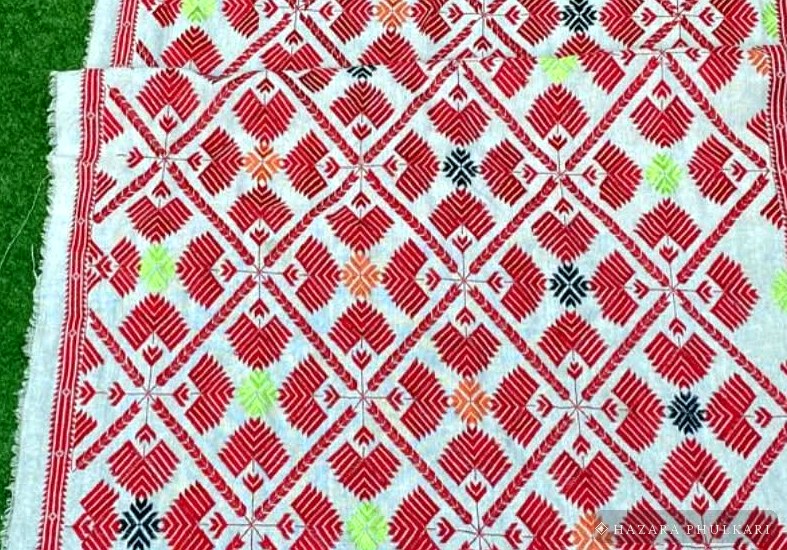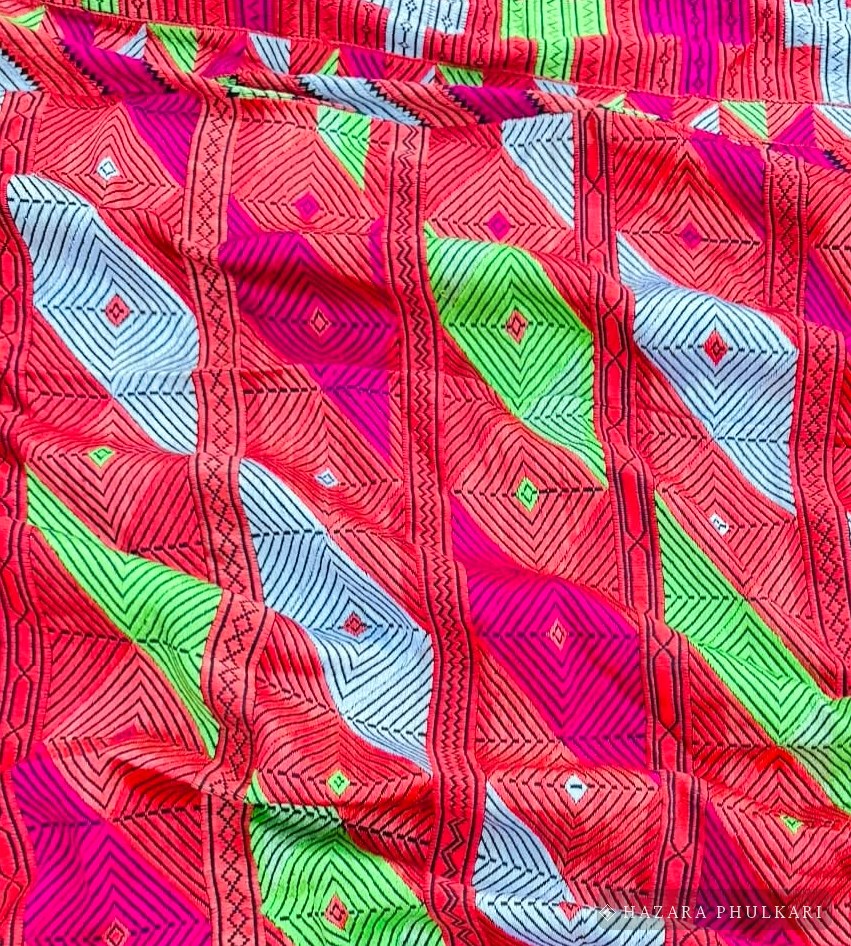
Phulkari is a hand embroidery tradition in which motifs are built up thread by thread across a woven ground fabric. The word itself refers to floral work, though the tradition includes geometric patterns, repeating motifs and dense all-over surfaces.
What makes Phulkari recognisable is not one single pattern but the way the embroidery is worked: by hand, in counted stitches, with the structure of the fabric guiding the placement of each motif.
Embroidery Worked From the Reverse
In traditional Phulkari, much of the work is carried out from the reverse of the fabric. The embroiderer counts threads in the weave and places stitches accordingly, so the pattern emerges on the front face of the cloth.
This method requires the embroiderer to hold the pattern in mind while working, which is why experience matters so much in this craft. There is no printed outline to follow.
Thread, Fabric and Colour
Phulkari is traditionally worked with floss silk thread on a plain woven base fabric. The thread has a natural sheen, and because the stitches are long and directional, light catches the surface differently as the shawl moves.
Colour is used deliberately. Some pieces use a wide palette of contrasting shades, while others use a single colour family so that the pattern reveals itself only at close range.
Why Every Piece Differs
Because the work is done entirely by hand, no two shawls are identical. Slight variations in stitch density, motif spacing and thread tension are natural characteristics of handwork rather than faults.
These small differences are what give a handmade Phulkari shawl its individual character.
If you would like to know more about a particular piece in our collection, you are welcome to send an enquiry and we will share the details with you.
Enquire Now