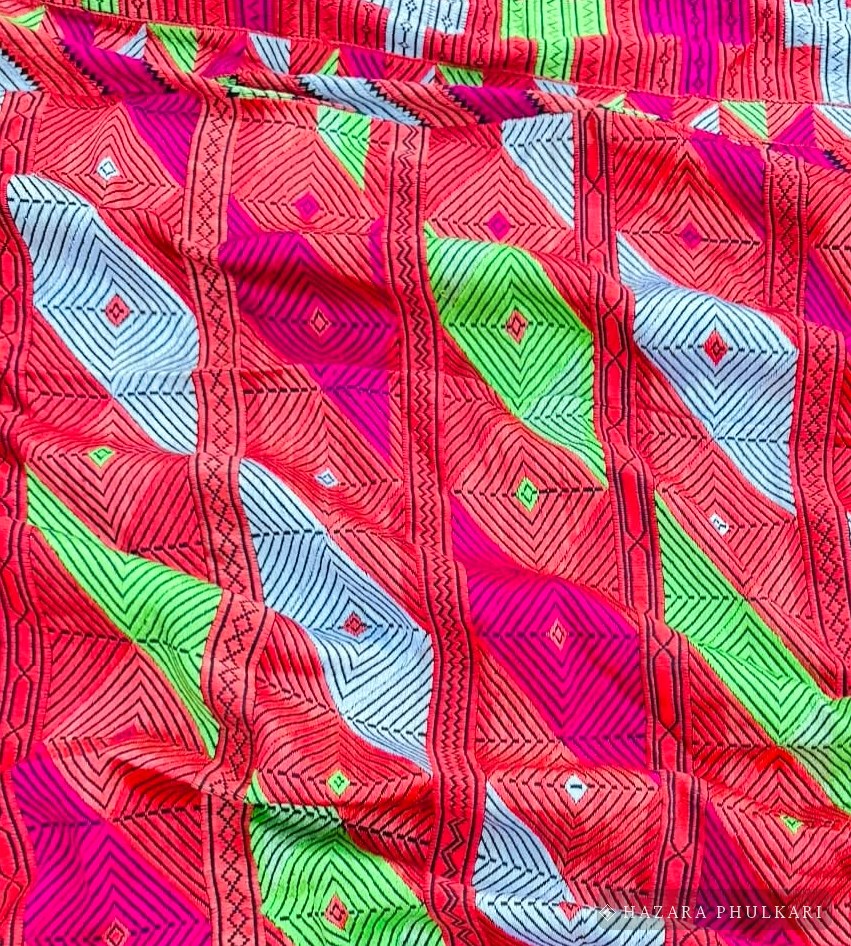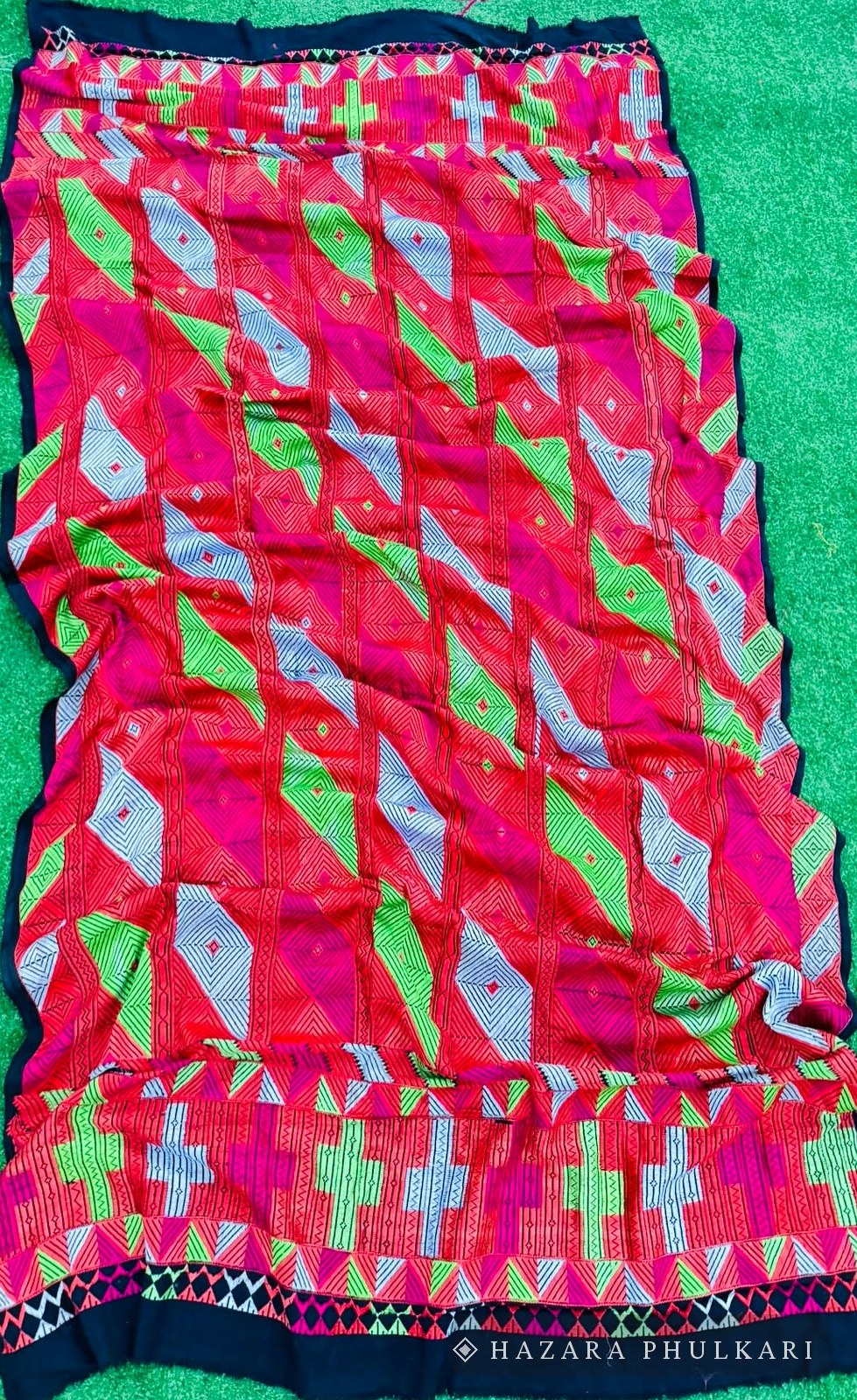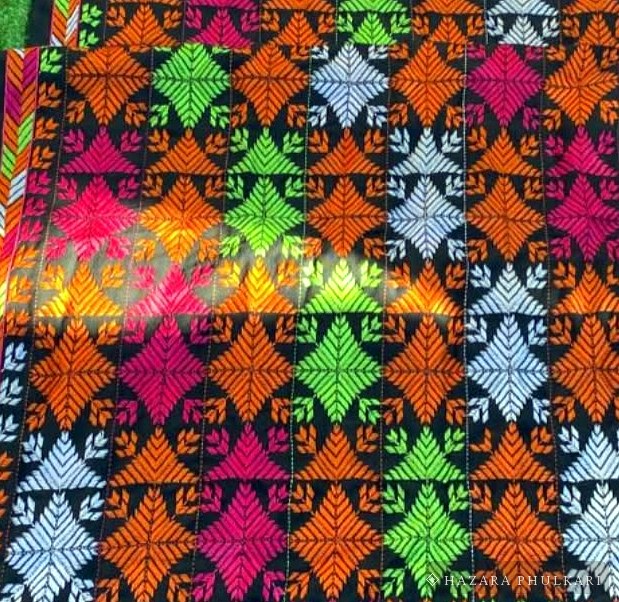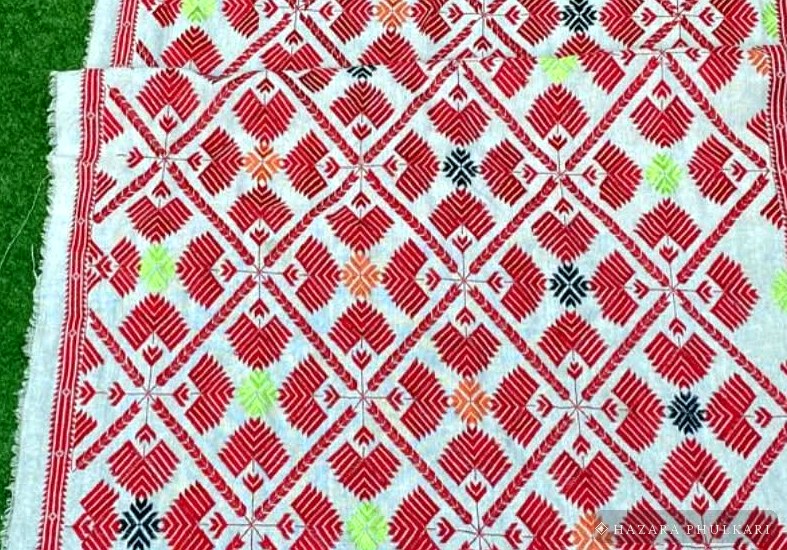
Machine embroidery can imitate Phulkari motifs closely, so it helps to know what to look for. The clearest evidence is usually found in the details rather than the overall pattern.
Look for Natural Irregularity
Handwork contains slight variation. Stitch lengths differ marginally, motif spacing shifts a little across the piece, and repeated elements are similar rather than identical.
Machine embroidery is uniform. Perfect repetition across a large surface is usually a sign of mechanical production.
Examine the Reverse
The reverse of a handmade piece shows the working method: carried threads, joins and the structure of the stitching. Machine work typically shows a backing layer and a flat, regular underside.
Watch How Light Moves
Because hand-stitched threads lie in deliberate directions, the surface shifts in appearance as the angle of light changes. This directional sheen is difficult to reproduce mechanically.
Every piece in our collection is hand embroidered. If you would like additional photographs of a particular shawl, simply ask.
Enquire Now