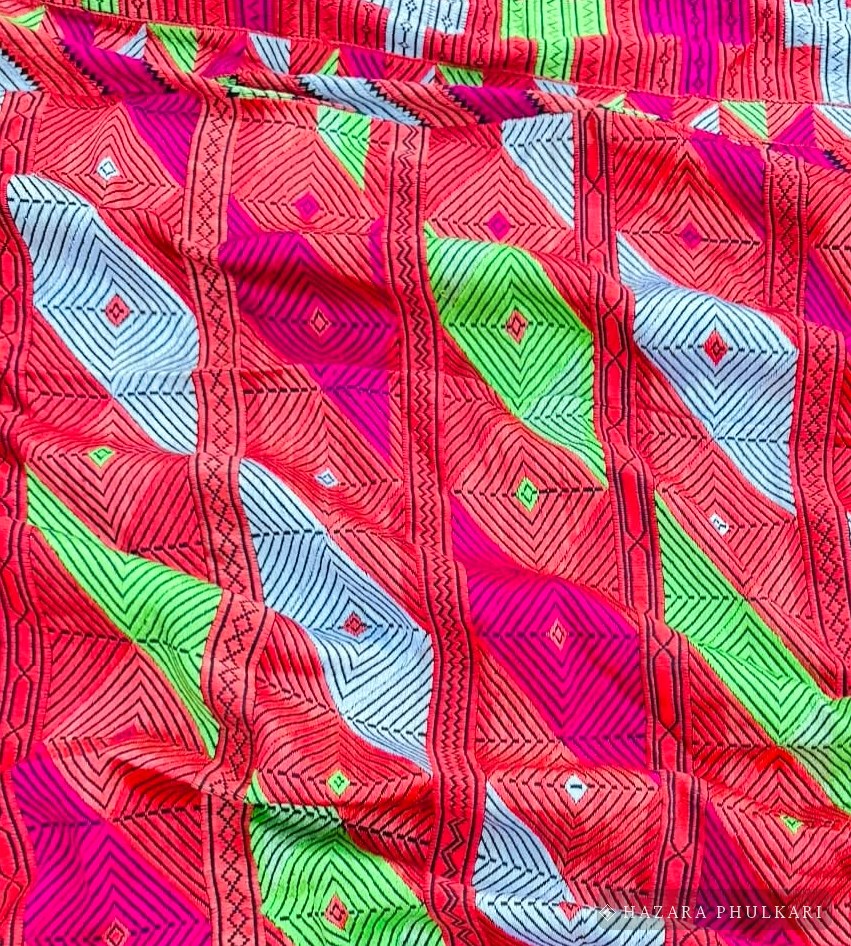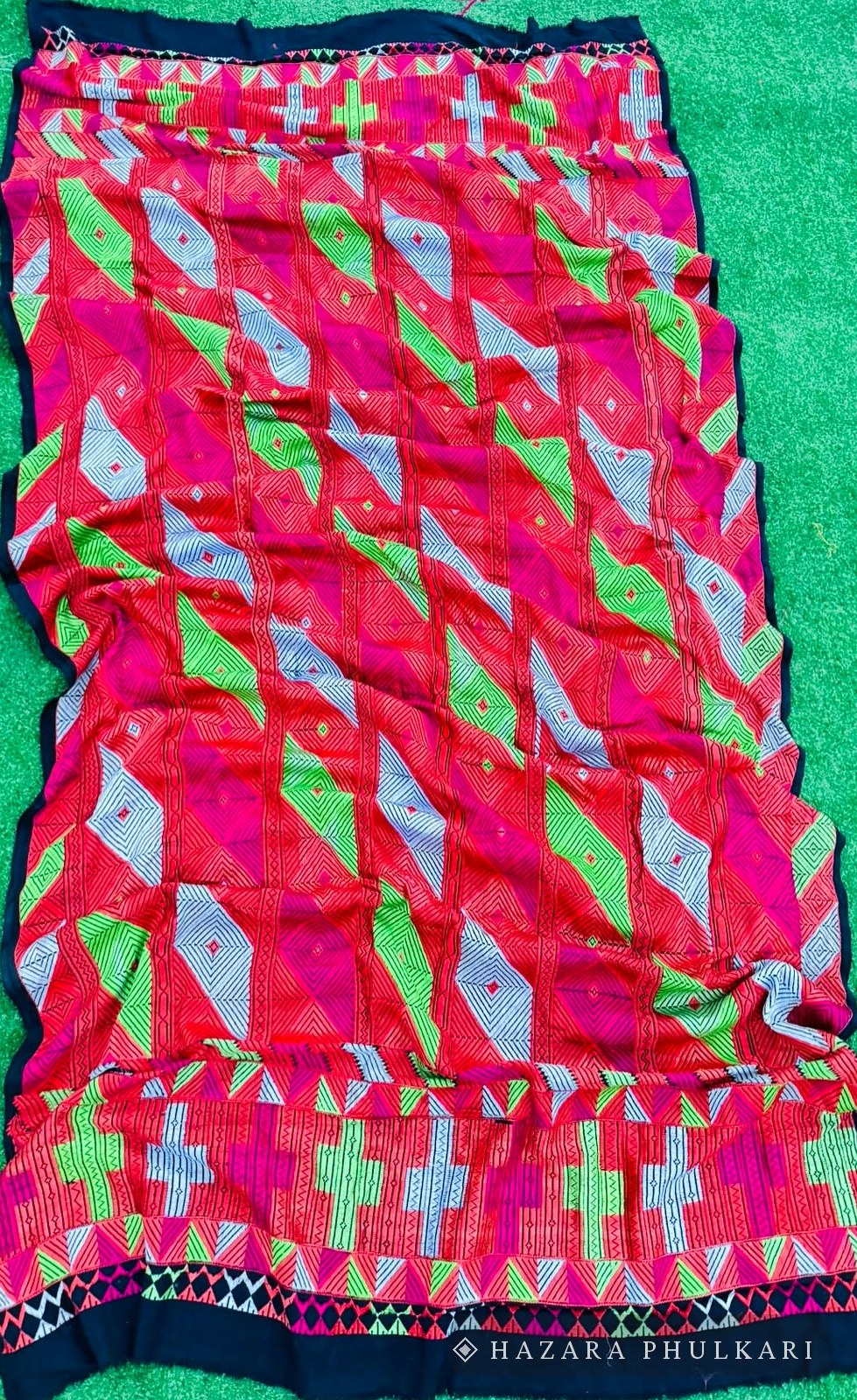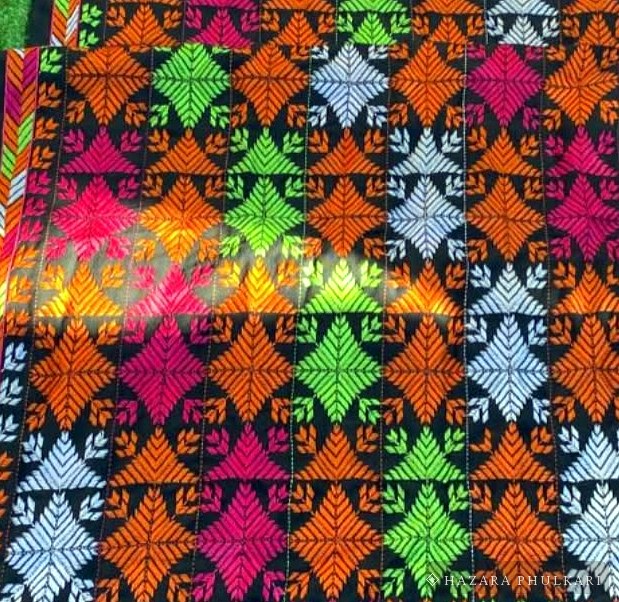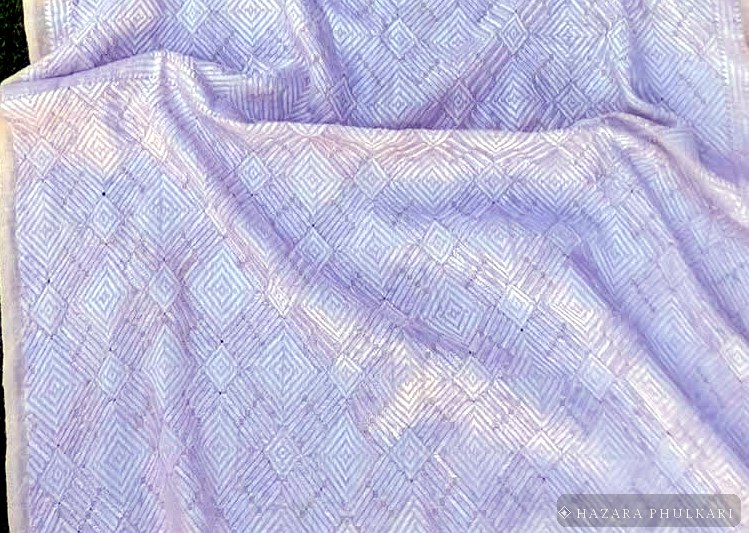
Hand-embroidered textiles are durable, but the threadwork benefits from a little care. Most damage comes from storage and handling rather than from wear.
Cleaning
Dry cleaning by a specialist familiar with hand-embroidered textiles is the safest option. If a piece must be washed at home, cold water, a mild detergent and minimal agitation are essential, and the shawl should never be wrung.
Dry flat, away from direct sunlight, which fades thread colour over time.
Storage
Store folded in a breathable cotton cloth rather than a sealed plastic bag, which traps moisture. Refolding along different lines occasionally prevents permanent creases forming in the same place.
Keep away from damp and from prolonged direct light.
Everyday Handling
Avoid catching the embroidery on jewellery, bag straps or rough surfaces, since a pulled thread is the most common form of damage. If a thread does lift, do not cut it; it can usually be eased back into place.
For care advice on a specific piece from our collection, feel free to contact us directly.
Enquire Now